APS Mission Statement: The American Polar Society has since 1934 united people and institutions from around the globe and pole to pole to appreciate, celebrate, and further knowledge and understanding of the Arctic and Antarctic land, sea, and ice.
Hello Friends and Members of the American Polar Society!
Table of Contents
- Message from the President
- Call for Volunteers and Thank you Members!
- Nobel Prize for Physics 2026
- Shackleton Medal
- Update: Dr. Arnold Gordon
- Greenland’s Inuit populations
- International Polar History Year 2028
- Essay: Mother with Two Cubs, July 1996
- Movie Review: The Duke versus the Arctic
- In the News
- Build on the Past … but get with The Polar Times
Message from the President
Dear Members and Friends of The American Polar Society,
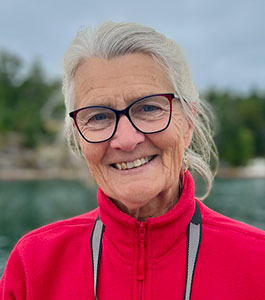
It’s been an exciting few months for the American Polar Society, and I’m happy to report that things are moving in a very positive direction! Our membership continues to grow slowly but steadily, and our financial position remains stable. Just as important, several members have stepped forward to share their time, skills, ideas, and connections. Their willingness to help us reach new audiences and introduce APS to their own networks is incredibly encouraging.
Behind the scenes, our Board members have also been busy—attending international polar meetings, building relationships, and working on a variety of polar initiatives and partnerships. There is a lot happening, and we are beginning to see the benefits of those efforts.
You’ll read about some of these activities in this issue of Voices from the Ice, with more to come in future issues of The Polar Times. We are working to make APS an even more active and welcoming community for everyone who shares our passion for the Arctic and Antarctic.
Thank you to our members, volunteers, supporters, and Board for continuing to be part of this journey. There is a lot of good energy within APS right now, and I’m excited about where we are headed!
Warm regards,
Susan Adie, President American Polar Society
Thank you, Members! Volunteers Needed!
It is with deep gratitude that we thank all members of The American Polar Society. As an all volunteer organization, we would not exist without you contributing your time and money.
- Board Member: Please contact us if you are interested in taking a leadership role in the APS. We welcome active contributors who will advance our mission statement. Board members serve two year terms starting January 1.
- Website Guru: We are looking for an internet savvy individual to help us maintain and expand our web page and to work with our social media expert to increase the effectiveness of our online outreach.
- Legal Advisor: We are looking for someone to help us answer basic but important legal questions that we as a non-profit must answer.
If any of these sound like a perfect opportunity to you, please reach out to us on info @ americanpolar.org.
Also, we would like to partner with more organizations to enhance education in and encourage involvement with polar communities of science, culture, government, and education. If you are connected with an organization you think would be open to discussing future lecture series or symposia, please drop us a note at info @ americanploar.org.
Nobel Prize for Physics 2026
The Royal Swedish Academy of Sciences awarded on October 6th the Nobel Prize in Physics 2026 to Dr. Francis Halzen of the University of Wisconsin, Madison, for decisive contributions to the IceCube Neutrino Observatory and the discovery of high-energy neutrinos of astrophysical origin. IceCube is designed to answer questions about neutrinos, which have the nickname of “ghost particles” because they are exceedingly difficult to locate. Neutrinos are everywhere and even pass through solid substances (such as the human body) without interacting with anything. However, occasionally, a single neutrino will interact with an atomic nucleus, which makes it possible for someone with the right equipment to discover them. That equipment is what is buried in kilometers of ice at the South Pole. The questions we have about these ghost particles are significant: what are they, where are they, and what are the main processes inside them? (Link to diagram.)

The U.S. National Science Foundation IceCube Neutrino Observatory is located at the South Pole and is staffed by 450 scientists in 58 institutions from around the world. As explained by one physicist who has worked on the project, IceCube is located at the South Pole because that is the easiest place to detect these neutrinos, although by no means should easiest be equated with easy.
Congratulations Dr. Halzen and everyone who has worked on IceCube!

Shackleton Medal 2026

Mr. Romain Troublé, microbiologist and leader of the Tara Polar Station project, was selected as the winner of the 2026 Shackleton Medal. The judges selected Troublé due to his vision of a futuristic vessel with a geodesic dome that has been designed to drift in polar sea ice all year round. Scientists will be able to study one of the fastest changing environments on the planet in the Tara Polar Station, which contains six laboratories, a central moon pool that allows researchers to take samples directly from the ocean, underwater and aerial drones, and a sauna to keep spirits up. You can read more about his selection and about Tara Polar Station in last quarter’s Voices from the Ice.
We are also proud that American Polar Society Board Member Denise Landau was on the seven-person shortlist for the award. Denise was recognized for her leadership of the U.S.-based non-governmental organization Friends of South Georgia Island (FOSGI) and for having been Trustee for Scotland-based South Georgia Heritage Trust (SGHT). Both organizations are dedicated to protecting and conserving the natural and cultural heritage of the sub-Antarctic island of South Georgia and restoring its ecological balance. Denise has been a member of the American Polar Society since 2009, as well as past President and Vice President, cofounder of Linking Tourism and Conservation (OETE-LTandC) and former Executive Director of the International Association of Antarctica Tour Operators (IAATO).
Update: Dr. Arnold Gordon
We were pleased to receive an update from Dr. Arnold Gordon, who was awarded in 2000 the American Polar Society Honorary Membership, which recognizes career achievements in polar research and exploration. He shared with us his thoughts as a polar scientist via his memoir and his Columbia University Distinguished Alumni Lecture, which trace his distinguished career in physical oceanography. He described his own area of study as ranging from the cold southern polar regions to the hot tropics, and in-between as well as from the top to the bottom of the water column. A theme throughout his reflections on his career was the role of unexpected or unplanned discoveries that eventually lead to discoveries of global significance.
His research over the decades led to new insight into interocean exchange and deep ocean ventilation, which are now widely explored: Southern ocean (two modes of convection, along the margins of Antarctica and in the open ocean of the Weddell Sea); Agulhas Leakage (Indian Ocean invades the Atlantic, essential to the Atlantic Meridional Overturning Circulation); and the Indonesian Throughflow (tropical Pacific water spreads into Indian Ocean, part of the global interocean thermocline exchange). His findings continue to drive questions and research today, such as whether the Agulhas Leakage might offset the freshening of the northern North Atlantic, which is often said to lead to reduced Atlantic Meridional Overturning Circulation.

On a more personal note, Dr. Gordon said, “Scientific discovery at sea is exhilarating, an adventure that few experience. The long voyage far away from home is rewarded with new views of how the ocean is stratified and circulates, and with insight on the processes that govern its behavior. Collecting data at sea is specially challenging in remote regions of harsh conditions as in the Southern Ocean, where wind, waves and ice conspire to make observations particularly difficult.” He advises individuals to understand their own interests and talents in order to better recognize and take advantage of potential opportunities. He also advises researchers to stop making further observations once you “understand” a time-series, that is unless you want to make further discoveries, and beware since there are always more discoveries to be made. He was also thankful his career spanned the time of fewer observations so there was more fun and art! Thank you, Dr. Gordon, for sharing with the APS your reflections on your successful career!
Greenland’s Inuit Populations
The United States signed in September an agreement with Denmark and Greenland after two years of intense conversations on the national security and economic interests of the world’s largest island. The agreement will hopefully allow the focus of respectful attention to return to the Inuit populations of Greenland.

As described in this article, the Kalaallit (Inuit of West Greenland), the Tunumi (Inuit of East Greenland) and the Inughuit (Inuit of North Greenland) together represent nearly 90% of the population of Greenland, which totals about 57,000 people. Being Inuit, the Greenland populations participate in the Inuit Circumpolar Council (ICC), which is an international Indigenous Peoples’ Organization representing Inuit from Alaska, Canada, Kalaallit Nunaat, and Chukotka (Russia). The ICC is dedicated to strengthening Inuit unity, advancing Inuit rights and interests internationally, and formulating long-term policies to protect the Arctic environment through domestic governments and as a Permanent Participant of the Arctic Council. ICC officials repeatedly said before the agreement that Greenland was a homeland for its Inuit people and not for sale but accepts the recent agreement. As Greenland’s Foreign Minister, Mute Egede, stated at the recent Arctic Circle conference in Iceland, “Nothing about Greenland without Greenland.” (Photo of FM Egede by APS Board Member Mead Treadwell)
An alternative way to see Greenland and its Inuit populations is through the DAAMANI — Back then in East Greenland exhibit in Copenhagen, Denmark and Tasiilaq, Greenland. This is an exhibit of photographs of everyday life in Tasiilaq (East Greenland) in the 1950s and 1960s by photographer Arkaluk Bianco (1921–1987). Bianco’s granddaughter, Nauja Bianco, emphasizes that Bianco was a native of Tasiilaq, making the subjects of his photographs less as symbols of the region and more as individuals. As Nauja explains, the photographs help prevent the people of an area disappearing when the focus is only on that area due to security or wealth.

International Polar History Year 2028
Caroline Alexander, best-selling author of The Endurance: Shackleton’s Legendary Antarctic Expedition and curator of the American Museum of Natural History’s international blockbuster exhibition of photographs that survived Shackleton’s expedition, has joined the IPHY2028 Steering Committee. She was also the writer and producer of two award-winning documentaries based on her book, including the IMAX® Shackleton’s Antarctic Adventure.
At its September meeting, the Committee adopted the following mission statement: International Polar History Year 2028 will celebrate the remarkable history of the increasingly vulnerable polar regions through a global network of activities and exhibitions hosted by local, national and international organizations. From indigenous oral histories to written journals and photographic records, the annals of polar exploration are filled with stories that inform, astound, and inspire. By engaging the broadest possible public, the presentations of these histories will help raise interest and concern for the regions at the ends of our shared Earth ahead of the 2032-33 International Polar Year.
Expressions of interest have already been received such polar and polar-interested organizations as: Admiral Byrd.com; American Geographical Society; American Philosophical Society; Elisha Kent Kane Historical Society; Friends of South Georgia; Indiana University, Bloomington; National Maritime Museum, Greenwich London; New Bedford Whaling Museum; Royal Canadian Geographical Society; UK Antarctic Heritage Trust; and US Army War College. And, of course, the American Polar Society.
The Steering Committee can be reached at iphy2028 @ gmail.com and would be happy to hear from any organization that might like to participate. Additional details are available at https://www.iphy.news/.
Essay: Mother with Two Cubs, July 1996
It was past midnight—a term that means little in the 24-hour sunlight of an Arctic summer. The sun was still bright, painting the landscape in the soft yellows of an Arctic “night.”
I could not sleep. I had stayed up to watch the sun circle around us as we headed north through Baumann Fjord, between the lunar landscape of Devon Island and the mountains of Ellesmere Island’s Raanes Peninsula. We had just passed Hell Gate, a narrow passage with strong currents and surprisingly little ice. Ahead, everything changed. The sea was covered in ice, some of it flat and unbroken, some of it crushed into massive pressure ridges.

Wind and currents constantly move and reshape the ice, and the officers on the bridge navigate our giant icebreaker, the Kapitan Khlebnikov, through it like threading a needle, searching for the safest leads forward. I loved those quiet hours on the bridge. No guests, just the hum of equipment, the officer on watch, and the helmsman scanning for ice or other obstacles. And me? I was watching for wildlife. I was not disappointed.
The watchman and I spotted them at almost the same moment. A bear. Then another. A mother with two cubs of the year. The officer was alert and immediately slowed down and worked to position the ship. The crew were experts at this type of maneuver, moving the ship without startling the animals. My job was to quietly wake up the ship’s guests and get them out on deck to enjoy the view. The mother had found a small pressure ridge and was completely relaxed, stretched out on her back and nursing her cubs. She was roughly 300 meters away and showed no interest in us whatsoever. The cubs, however, were ready to play. (Photo from https://polarbearsinternational.org/)
They tumbled over one another, scrambled up the pressure ridge, and slid back down, often bumping into Mom. Then they would disappear over the ridge, only to pop back into view and do it all over again. The ship settled against the ice, drifting at the same pace as the bears. For nearly an hour, we held our position while the mother rested and the cubs played. The sunlight did not change, the night sky was blue and never ending.
A pair of Ivory gulls came into view for a short period of time but decided there were no leftovers to take advantage of and moved on. The mother continued to rest and the cubs continued to play! Eventually, she got up, stretched and sniffed in our direction and began to walk away. The cubs watched her for a moment, then hurried along behind her. We stayed until the three disappeared into the jumble of ice. We kept a safe distance, as is now proscribed by guidelines about polar bear interactions.
Everyone had remained silent while watching. You can just tell when emotions are running high in your guests. People turned to hug each other. Some wiped away a tear. Some dropped by the bridge to thank everyone involved for making it happen. Some of the best moments in the polar regions are simply impossible to plan. This was one of them. And it is a scene that stays in my heart to this day.
Movie Review: The Duke versus the Arctic
Here’s a trivia question for you: “In what movie did John Wayne battle—not the Apaches, the Axis Powers or Lee Marvin—but cold weather?” Give up? The answer is one of the least known titles in the filmography of one of Hollywood’s best-known stars, Island in the Sky.
The 1953 film emerged from a sidelight operation of World War II, when airline pilots were recruited by the Army Air Transport Command to ferry supplies along the Newfoundland-Greenland-Iceland route to Great Britain. A C-47, approaching the coast of Labrador on a return leg from Greenland, encounters fog and precipitation, with ice forming dangerously on the wings and control surfaces. Wayne is in the pilot’s seat. Unable to fix his position or pick up a radio bearing due to interference from the Northern Lights, his sole recourse is a forced landing, stranding himself and his crew in uncharted territory hundreds of miles northwest of the St. Lawrence River.
Presque Isle Army Airfield receives Wayne’s distress signal. Familiar faces, for viewers of a certain age, abound among the assembled search-and-rescue teams, including Lloyd Nolan, Andy Devine (in a non-comedic role), and a young James Arness. But where do they start looking? The Duke, meanwhile, presides over a Shackleton-like survival ordeal with dwindling rations, a dying radio, and plummeting temperatures.

Based on a novel and screenplay by a veteran of the Air Transport Command, author/aviator Ernest K. Gann, and directed by Academy Award winner William Wellman, Island in the Sky is a taut “northern” that stacks up favorably alongside the Duke’s best westerns.
In the News …
In August, President Trump nominated Dr. Julia Nesheiwat to serve as the U.S. Ambassador-at-Large for Arctic Affairs and the U.S. Senate Foreign Relations Committee held a hearing on her nomination in September. If confirmed by the U.S. Senate, she will be the second person to hold this position. Dr. Neshiwat has previously served as the White House homeland security adviser, Deputy Assistant Secretary of State for Energy, and a Commissioner on the U.S. Arctic Research Commission. She participated in the APS Perspectives on the Arctic roundtable in May.
While polar explorer Ernest Shackleton is most associated with the Endurance, the last ship he sailed on was the Quest in 1922. The lesser-known ship sank in 1962 off the northeast coast of Canada after a long career of polar activities and was recently visited by the Royal Canadian Geographical Society via submersibles. The ship is covered in “ghost gear”, which is the term for nets, floats, and other abandoned fishing gear, and is an oasis for marine life.
The American Geophysical Union (AGU) will hold its annual meeting in San Francisco in December. It advertises itself as the largest gathering of Earth and space scientists with over 25,000 attendees from more than 100 countries. Although the exact submissions and findings are not yet known, every year leading researchers share cutting-edge finds important to the two polar regions (and elsewhere) at this meeting.
The Elisha Kent Kane Historical Society (EKKHS) will be hosting a lecture by Susan Kaplan, the Director of the Peary-MacMillan Arctic Institute, Brunswick, Maine, entitled “Find a Way or Make One: Perspectives on Robert E. Peary’s North Pole Quest” on Tuesday, October 27 starting at 6:30pm at the EKKHS headquarters on West 23rd Street in New York City. Click here to register and pay for this in-person-only event.
Scientists at UC-Berkley have identified a brand new penguin species – the southeastern gentoo – that lives on the remote Kerguelen Islands, approximately 1,200 miles north of Antarctica. They also clarified that there are three additional gentoo penguin species: the northern (Falkland/Malvinas and Martillo Islands off of South America), southern (Antarctic Peninsula, coastal Antarctica and South Georgia Island), and eastern (Crozet, Marion and Macquarie Islands) gentoos. While the southern gentoo is expected to increase in numbers due to climate change, the smaller populations of the northern, eastern, and southeastern gentoo species are expected to be vulnerable to climate change.
At the northern side of the globe, the U.S. National Park Service once again ran its annual Fat Bear Week, which lets the general public vote on which brown bear at Kitami National Park did the best job preparing for the winter. The winner this year was Bear 89, aka “Backpack”.
Build on the Past but get with The Polar Times
Join the American Polar Society to receive our flagship publication, The Polar Times. It is our hard-copy journal that prints articles from scientists, historians, artists, writers, explorers, and support personnel covering past, present and future happenings in both the Arctic and Antarctic.
The American Polar Society has since 1934 united people and institutions from around the globe and pole to pole to further knowledge, understanding, appreciation, and celebration of the Arctic and Antarctic land, oceans, and ice.
Members today come to us from the four corners of the Earth and all walks of life! Anyone who has lived, worked, or explored the ice—or merely read and dreamt about it—are welcome to join and become engaged. Our continuing success is based on everyone’s contribution.
Projects we look forward to in our next decade:
- Podcasts
- Virtual presentations
- Live symposia
- Honoring polar pioneers
You can join by visiting our website (americanpolar.org) or by completing and submitting the form below. Please be sure to provide an email address when joining so we can stay in touch!

Contributors to Voices from the Ice
Voices from the Ice is edited by William Muntean and features articles by Susan Adie (Essay) and Sheldon Bart (Movie Review). Please contact APS at info @ americanpolar.org if you are interested in contributing to future editions.