APS Mission Statement: The American Polar Society has since 1934 united people and institutions from around the globe and pole to pole to appreciate, celebrate, and further knowledge and understanding of the Arctic and Antarctic land, sea, and ice.
Table of Contents
- Message from the President
- Join APS in NYC! Perspectives on the Arctic: Then and Now
- Voices from the Ice LIVE!
- It Doesn’t Always Go as Planned
- Annual Polar Ice Watch Continues, But At Reduced Capacity
- Two Drills, Two Results
- Tagak Curley, Bridging Inuit Tradition and Modern Leadership
- Television News: North of North
- Movie Review: Beneath the Polar Sun
- In the News
- Call for Volunteers and Thank you Members!
Message from the President
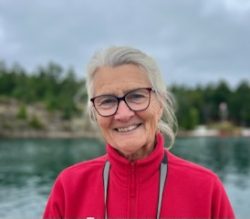
Dear Members and Friends of The American Polar Society,
After nearly a century of sharing stories about polar exploration, scientific discovery, and government activity, the APS is expanding its horizons – and -yours by including voices from a broader community of people passionate about the polar regions. This includes increased contributions from Indigenous communities, educators and students, travelers, and artists. Together, we bring a rich diversity of knowledge and experience to share with one another and with those who are less familiar with the polar world.
We are also extending our collaborations with other institutions and polar focused groups. For example, we have begun working with students of University of North Carolina’s Hussman School of Journalism and Media to strengthen our communications efforts. At the same time, students are excited to be introduced to the compelling stories of the polar regions. Additional collaborations include the Elisha Kent Kane Society, which focuses on the history of Arctic exploration; the UK Antarctic Heritage Trust; and Oceanites, informally known as the “Penguin Counters.” Most notably, we are preparing for our upcoming mini-symposium in Manhattan in May, which you will learn more about later in this newsletter.
We invite you to become a member for just $50 per year and receive two issues of The Polar Times delivered to your home or office. Institutional memberships are available for $75 per year, allowing organizations to share these resources with colleagues. You may also consider supporting the APS by donating to the Brian Shoemaker Fund, helping to ensure the continuation of our work.
We welcome your stories and encourage you to connect with us to share at info@americanpolar.org.
Susan Adie, President, APS
Join APS in NYC! Perspectives on the Arctic: Then and Now
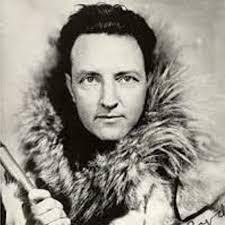
Thursday, May 7, 2026
6:30 PM to 9:00 PM
71 West 23rd Street, 6th Floor, New York City
The American Polar Society is pleased to announce that we are once again mounting public events. In collaboration with the Elisha Kent Kane Historical Society, we will host “Perspectives on the Arctic: Then and Now, What a Difference 36,500 Days Make” a program commemorating a century of Arctic exploration and exploring the rapidly evolving geopolitics of the region.
Please RSVP to attend in-person or virtually.
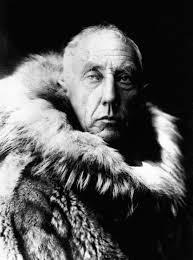
The event celebrates the centennial anniversary of the historic 1926 North Pole flights of Richard Byrd and Roald Amundsen. Held in the iconic Kane-Peary-Byrd Room, a polar exhibition showcase in midtown Manhattan, the program includes a presentation by author Sheldon Bart (Race to the Top of the World: Richard Byrd and the First Flight to the North Pole), followed by a panel of diplomats and policy experts discussing 21st century strategic challenges.
Panelists will include former U.S. Homeland Security Advisor Julia Nesheiwat, Ph.D., and former Alaska Lieutenant Governor Mead Treadwell, as well as the State Department’s former lead Arctic and Antarctic negotiator Raymond V. Arnaudo and Arctic policy scholar Captain Lawson W. Brigham, USCG (Ret.), Ph.D.
Voices from the Ice: LIVE!
We have started a new way to bring the polar regions to you and you to the polar regions via Facebook with Voices from the Ice LIVE!
We kicked off our series in December 2025 with Jamie Watts, a marine biologist and polar expedition guide. With over 25 years of experience educating others about Antarctica, Jamie shared his excitement at the start of the season — especially about the large concentrations of fin whales observed in recent years.
Next up was Esther Hovarth who is an award winning polar photographer and a National Geographic Explorer. She had the honor of being chosen as a National Geographic Explorer that discovered the sunken Endurance in the Weddell Sea. She shared with us many good stories about that remarkable experience.
Dr. Kate Robb, Executive Director and Head of Research at the Marine Mammal Foundation, told us about the portion of her Antarctic season she spent counting penguins with Oceanities. We learned about the long term study of penguin numbers on various islands around the peninsula (including a few continental ones) and about the methods used.
Dr Brandi Revels, part of the Cornell Icefin Robot Research Team in Greenland, shared with us the techniques that the Icefin Robot Project uses to understand life under the ice. She explained they will be based in Pitufik, US Air Force Base and traveling out onto the ice to gather samples for further studies.
We also visited Lisa Ford and Peter Watson on the ground in Port Lockroy on the Antarctic Peninsula. They are part of the UK Antarctic Heritage Trust Team for this season who are maintaining the historic site, greeting visitors to the site and studying penguins.
Last but not least, we visited with Anna Lena Ekeblad, Polar Historian and resident of Longyearbyen, Svalbard. She was inside the historical remains of one of the first coal mining operations in Svalbard that brought a human population to permanently live on Svalbard. We also learned how cold it was in the polar night.
Follow us on Facebook as we announce our next guests!
It Doesn’t Always Go As Planned
After 37 years as a government employee doing applied cold-regions research and engineering management, spending 24 years at the US Army Cold Regions Research and Engineering Laboratory (CRREL) and 13 with the National Science Foundation’s Office of Polar Programs (NSF/OPP), I hadn’t had enough. Officially retiring in 2016, I continued work as a rehired annuitant at CRREL through 2021 and, with projects that interested me and were desired by various clients, I’ve remained professionally active since then as a contract employee.
I just returned from my 35th field deployment to Antarctica executing several tasks for CRREL that were funded by NSF/OPP. These tasks related to my primary passion, snow and ice engineering, and were associated with a snow runway I designed and constructed near McMurdo Station between 2015 and 2017. This runway rests on an ice shelf (thick floating glacial ice) where the upper approximately 100 ft is dry, wind-blown snow. Through progressive compaction activities, tied closely with environmental conditions and “rest” periods, a 200-ft wide by 11,000-ft long snow airstrip (Phoenix runway) was generated and since 2016 has supported routine flights by wheeled aircraft as large as the 500,000lb C-17 Globemaster. (The author, George Blaisdell, pictured collecting and recording runway snow strength data the old fashion way.)
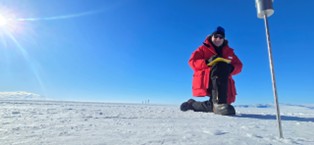

Having executed field projects in northern regions of the US including Alaska, Greenland, and at both US and other nation’s Antarctic stations, I’ve experienced a wide range of challenges. Working in remote and extreme weather conditions is the most predictable and manageable of those challenges. Like any research project, the most rewarding outcome is that it proves the going-in hypothesis. But if research always led to predictable results there would be few mysteries left in the universe. And, while laboratory and modelling-based research is often not very visible until a researcher decides to make it so, applied field work is harder to keep private. Working in a small fishbowl (McMurdo) and the Phoenix runway literally being a lifeline for the current NSF/OPP operational scenario for that site, all eyes seem to be on how the runway is holding up and what researchers are doing to keep it fully functional. (Pictured is a Assembling Heavy Weight Deflectometer for measuring dynamic pavement strength properties.)
During the latest deployment, my goal was to trial a state-of-the-art runway strength measurement device to replace the crude, user-dependent tool that has been used since Phoenix’s development. Through a combination of mostly unavoidable events, this project was not optimized for success upon arrival in McMurdo. After a week of attempting to get the new tool to operate as expected, it was clear that valuable field time should no longer be spent on this task. While disappointing (and the first true bust in my field career), focus was quickly shifted to secondary goals. Fortunately, the second week of deployment netted valuable data and observations that immediately provided better runway operational reliability and will form the basis for updated and improved documentation for the next austral summer’s busy flight schedule.
My lessons learned from this trip:
- Define and make every effort to configure for overall project success from the outset
- This includes always being prepared with worthwhile secondary and tertiary goals
- Carefully monitor progress toward primary effort success given available timelines and make defendable “cut bait” decisions at the appropriate time
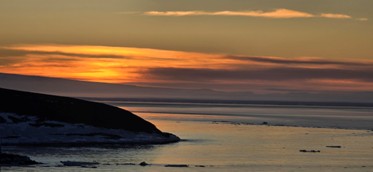
- (When the sun starts setting at night, it’s time to get off the ice, or it will be a loooong winter)
Annual Polar Ice Watch Continues, But At Reduced Capacity
Anyone interested in operating in either polar region needs to have an excellent understanding of the ice conditions in the Arctic and Antarctica. The National Snow and Ice Data Center (NSIDC) at the University of Colorado Boulder (CU Boulder), part of the CU Boulder Cooperative Institute for Research in Environmental Sciences (CIRES), conducts innovative research and provides open data to understand how the frozen parts of Earth affect the rest of the planet and impact society. Research studies and data are primarily focused on the snow, ice, glaciers, frozen ground and climate interactions that make up Earth’s cryosphere. However, as reported in earlier Voices, the United States is reducing funding for scientific activities including the information that makes NSIDC valuable. See here and here for additional information about U.S. cuts.
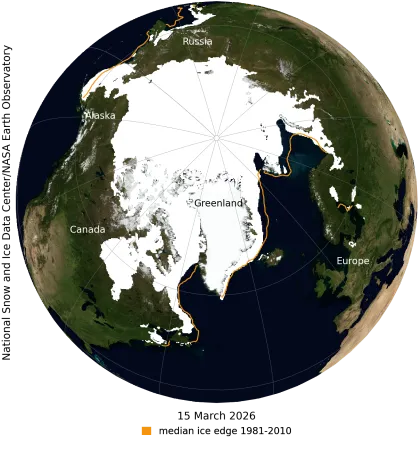
The NSIDC also reported that Arctic sea ice (above left) reached its maximum extent for the year at 14.29 million square kilometers (5.52 million square miles) on March 15, 2026. The 2026 winter sea ice extent edged just below last year’s record of 14.31 million square kilometers (5.53 million square miles), statistically tying for the lowest maximum in the 48-year satellite record.
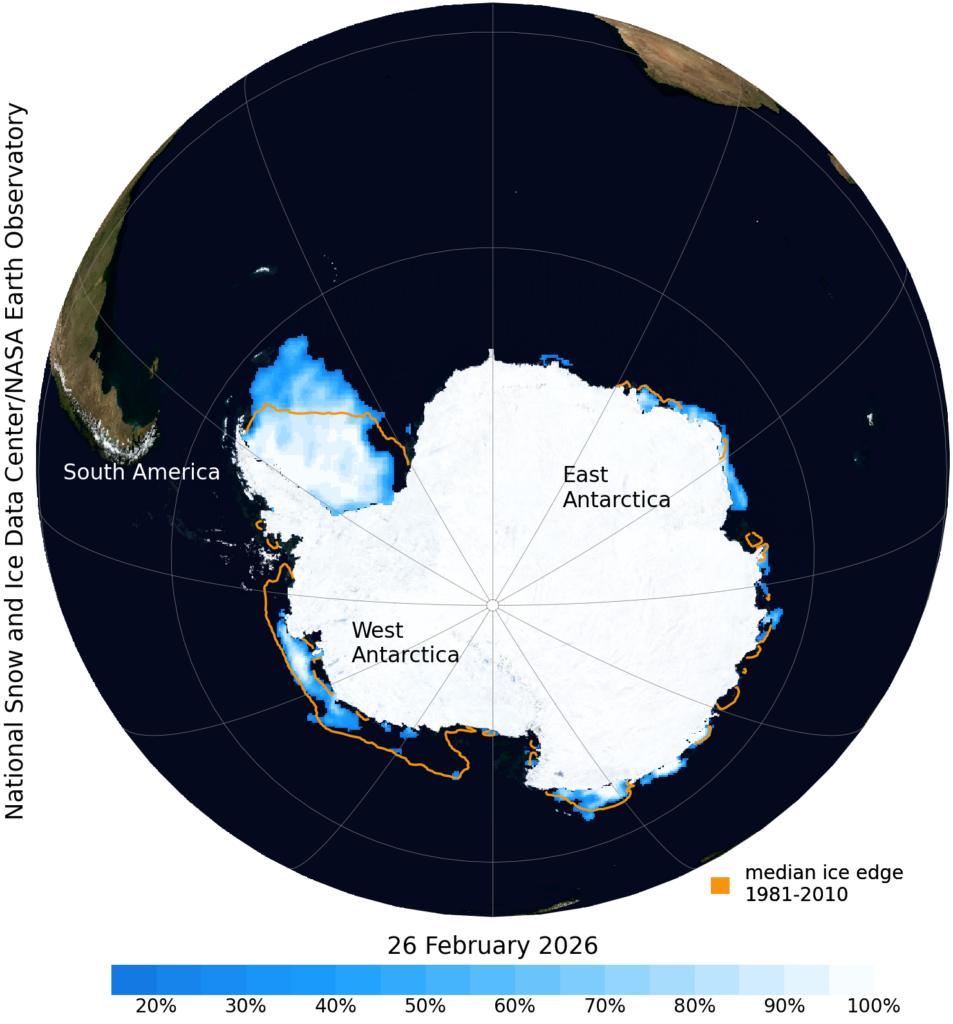
The NSIDC reported that Antarctic sea ice (above right) reached its minimum extent for the year at 2.58 million square kilometers (996,000 square miles) on February 26, 2026. This year’s minimum is much closer to average than the past four years, albeit still 260,000 square kilometers (100,000 square miles) below the 1981 to 2010 average.
Two Drills, Two Outcomes
Antarctica is a difficult place to work, particularly if your work involves drilling. The 2025-2026 season demonstrated this through two different results from two different drilling activities. In one case, scientists were unable to successfully install instruments to measure changes to the Thwaites glacier. In another, scientists were able to successfully extract a record amount of sediment that will provide a record of the Earth’s climate over the past 23 million years. Neither outcome was preordained and both will increase our knowledge in a part of the world that retains many mysteries.
In February, a multinational group of scientists led by researchers from the British Antarctic Survey (UK) and the Korean Polar Research Institute (South Korea) concluded that they were unable to achieve all of the goals of their mission. The goal was to drill through the Thwaites Glacier (colorfully nicknamed the Doomsday Glacier in a 2017 Rolling Stones magazine article) and install instruments to measure ocean conditions under the glacier. The plan was that the instruments would assist the scientists better understand the stability of that glacier and therefore improve predictions of future ice loss and global sea-level rise.
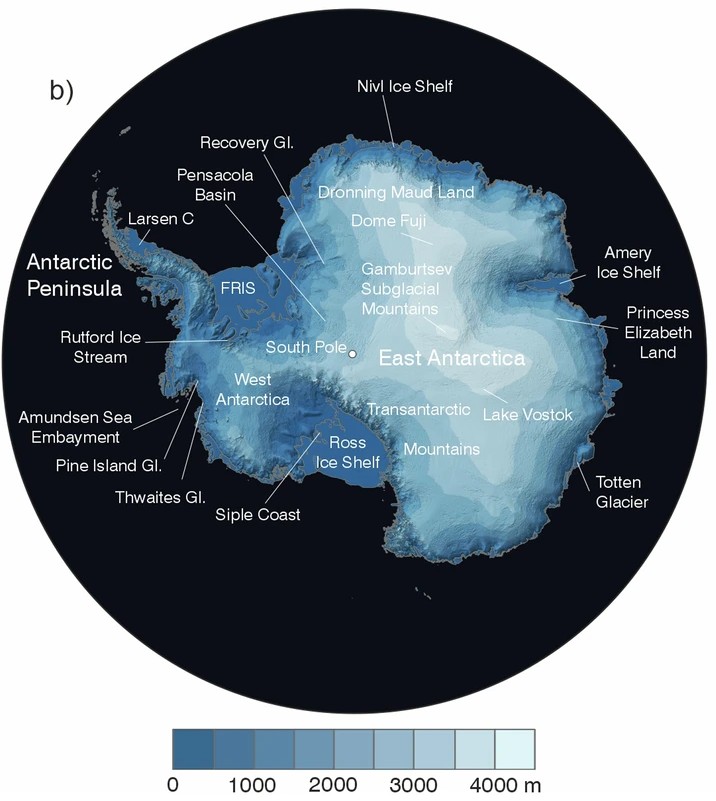
To achieve this ambitious goal, the drilling team used heated water to drill a borehole approximately 1 foot wide 3,300 feet (1,000 meters) through the ice. Threats to the borehole included refreezing due to the frigid surface and sub-surface temperature as well as strong winds, shifting ice, and equipment failure. The failure occurred when they were unable to lower the instruments all the way through the ice to the ocean floor, likely due to the movement of the ice, including refreezing part of the bore hole. Dr Keith Makinson, a UK oceanographer and drilling engineer, observed, “Fieldwork in Antarctica always comes with risk. You have a very small window in which everything has to come together. While this outcome is deeply disappointing, the data we did recover are scientifically valuable and will help shape future efforts.”
The Thwaites Glacier is located in the West Antarctic Ice Sheet. The glacier is in some places over 6,500 feet (2,000 meters) thick (see map). The volume of ice flowing from the continent into the sea via the glacier has already contributed four percent of the global sea level rise to date and the rate is increasing. The concern is that if the entire glacier entered the Southern Ocean that global sea level would increase by over two feet (65 centimeters), a catastrophic result that could occur in the 23rd century or later, depending on the actions we take today. Additional information about the project can be found here.
A few weeks later, an international team led by scientists from New Zealand and the United States announced they had recovered a record-breaking 228 meter (750 feet) sediment core from beneath the West Antarctic Ice Sheet. The core was obtained from under 523 meters (1,715 feet) of ice and contains information about the West Antarctic Ice Sheet and Ross Ice Shelf over the past 23 million years. The history of the region will be used to improve projections about future changes to the West Antarctic Ice Shelf, including the rate of global sea level rise. Binghamton (NY) University Professor Molly Patterson said about the findings as they were retrieved, “We saw a lot of variability. Some of the sediment was typical of deposits that occur under an ice sheet like we have at Crary Ice Rise today. But we also saw material that’s more typical of an open ocean, an ice shelf floating over ocean, or an ice-shelf margin with icebergs calving off.”
Similar to the drill team on Thwaites Glacier, the Crary Ice Rise team used a hot-water drill to get through the ice. As expected, they did not strike water but hit bedrock, so used a geological platform to extract the sediment core. This required constant attention to the ice at surface level as well as below. The project is called “Sensitivity of the West Antarctic Ice Sheet to 2°C” or SWAIS2C. They conducted their research at the Crary Ice Rise, which is up the map from Siple Coast, just off the Ross Sea ice shelf. (For scale, the Ross Sea ice shelf is approximately the size of France. The entire continent of Antarctica is roughly the size of Mexico and the continental United States.) The West Antarctic Ice Sheet, which includes the Thwaites Glacier, holds enough ice to raise global sea level by four to five meters (13 to 16 feet) if it melts completely.
Just in case you were wondering, drilling is allowed for scientific research such as was the case for these two drilling operations. However, drilling or mining for non-scientific reasons, such as to exploit oil, gas, or rare earth minerals for commercial purposes, is prohibited by the Environmental Protocol of the Antarctic Treaty. This prohibition does not expire or need to be renewed. In addition to that international legal obligation, Antarctica’s climate makes any sort of drilling logistically challenging as these two drilling outcomes demonstrated.
Tagak Curley, Bridging Inuit Tradition and Modern Leadership
One of the best sources to learn from Arctic explorers, researchers and communities is hosted by the Arctic Research Foundation. The below is from their recent article about Tagak Curley, a prominent Inuk leader and political figure from Nunavut, Canada.
Nunavut, which means “Our Land” in Inuktitut, was established in 1999. Its separation from the Northwest Province established Inuit self-governance and land management in a huge portion of Canada. Tagak Curley played a significant role in this landmark decision, first as the founder and first president of the Inuit Tapirisat of Canada in 1971, which protects and advances the rights and interests of Inuit in Canada, and as a representative to the Northwest Province government from 1979-1987.
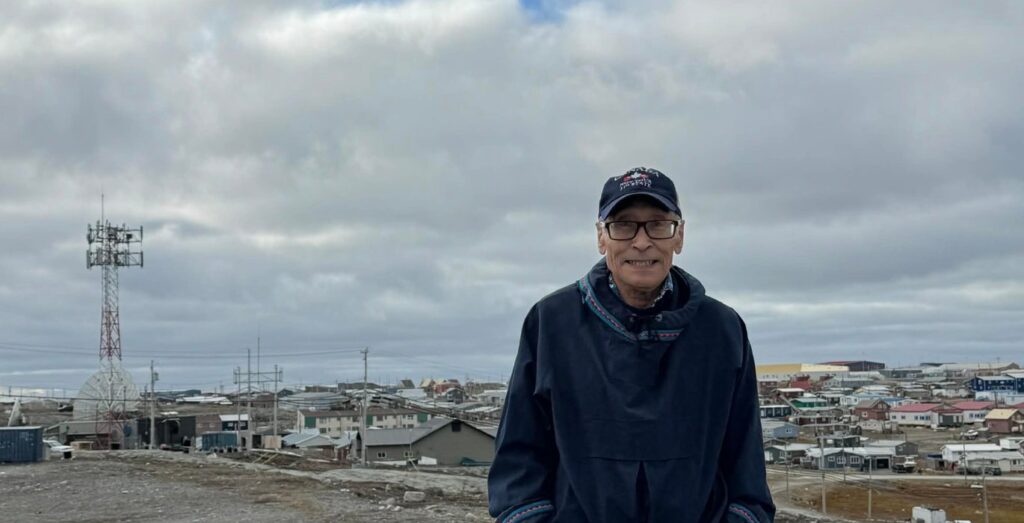
Curley was born and raised in the Inuit traditions, which included a deep respect for survival skills, the land, and language. This background gave him the rare ability to serve as a cultural and historical bridge between the Inuit and the rest of the world, which contributed to his political success. He remains passionate about his cause, and encourages future generations to honor Inuit traditions while engaging in the world today.
Television News: North of North
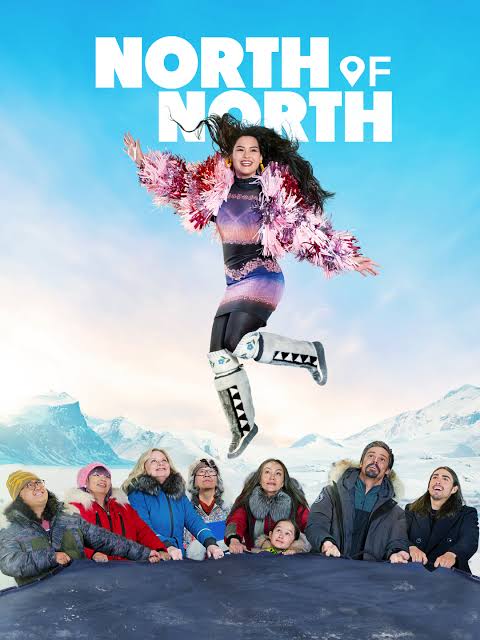
The new Indigenous TV comedy series, “North of North”, received 20 nominations for this year’s Canadian Screen Awards, including Best Comedy Series and Best Lead Performer (Comedy). The series is described as a winning exploration of Inuit culture, the stressful limitations of life in a small town, and the heartbreaking intersection between who you are and who you want to be. Its main character is Siaja, played by Anna Lambe, who is a young Inuk mother who is trying to break out of the rut she has found herself in. She is a sweet and genuine but awkward person. Though determined, her ambition is often stymied by her awkward nature.
If you prefer your reviews to have a Rotten Tomato rating, it is 100% (perfect) with the top review being: “There is no need for high drama nor low brow antics here, North of North is carried fully on personality, charm and location. You just want to spend time here and you want to spend it with these people.”
As reported by ICT, the series was merely one of a number of indigenous productions that received professional acclaim by the Canadian Academy, including “Uiksaringatara, (Wrong Husband),” which was nominated for Best Film. The awards ceremony will be on May 31. For those not familiar with ICT, its mission is to share more stories from Indigenous communities, told by Indigenous voices, to honor indigenous ancestors and empower future generations.
Movie Review: Ice Station Zebra – John Drake at the North Pole
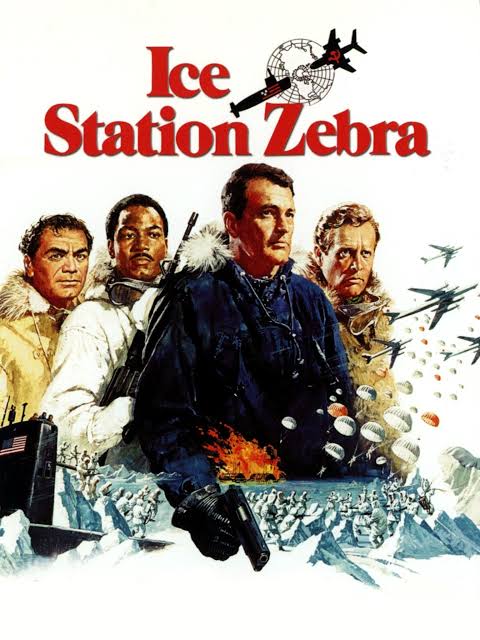
Although Rock Hudson got top billing in the 1968 cold war thriller, Ice Station Zebra, those of us of a certain age may prefer to think of it as a feature-length episode of Patrick McGoohan’s classic television series, Secret Agent.
In the movie, McGoohan co-stars as British agent “Jones” who hitches a ride on Hudson’s nuclear submarine to investigate skullduggery at a science station in the vicinity of the North Pole. Mr. Jones is a slightly more arch character than the steady, impeccable John Drake, whom McGoohan portrayed in 30- and 60-minute formats earlier in the sixties. The resemblance, however, is close enough. Along the way to the Pole, the submarine is nearly sabotaged under the ice, but who was responsible? The burly, “hail fellow” Russian defector played by Ernest Borgnine? The too-perfect Marine captain creaselessly enacted by Jim Brown?
John Sturges helms the action, and he’s certainly adept at doing so, having directed The Magnificent Seven, The Great Escape, and Gunfight at the OK Corral. He keeps the tension escalating and the audience guessing especially as we learn that the security of the world is at stake in the Arctic. Sturges is also pretty handy at mitigating climate extremities. McGoohan, Hudson and their Marine back-up disembark from the sub and grope their way toward Zebra station in blizzard conditions. Fortunately, the raging storm clears up in time for a dramatic showdown on the ice with Soviet Paratroopers.
In the News …
The Arctic Encounter Summit taking place April 15–17, 2026, in Anchorage, Alaska is the largest Arctic convening in North America, where experts and leaders from more than 20 nations are confirmed to meet in 2026 to shape what’s next for the region. Each year, policymakers, diplomats, Indigenous leaders, national security officials, researchers, investors, and industry representatives gather for three days of high-level dialogue, connection, and action. From mainstage sessions to curated discussions and immersive programming, AES advances the ideas, partnerships, and decisions shaping the Arctic’s future. Key topics include investment and economic development, shipping and infrastructure, geopolitics, scientific research, and the evolving national security landscape across the Far North.
The 30th Polar Libraries Colloquy, June 7-13, 2026, will be hosted at the Byrd Polar and Climate Research Center (BPRC) on the Columbus Campus of The Ohio State University in Columbus Ohio. This year’s theme is, Polar Regions: Past, Present, and Future. The BPCRC conducts world-leading, interdisciplinary research, education, and outreach focused on polar and alpine regions, cryospheric processes, and climate variability. It aims to understand the impacts of climate on the environment and society while preserving key historical records.
The International Union for Conservation of Nature announced in April that it now lists the Emperor Penguin and Antarctic fur seal as endangered species. Climate change in Antarctica is leading to changes in sea-ice that are projected to cause the emperor penguin population to halve by the 2080s, while reduced food availability has already driven a 50% reduction in the Antarctic fur seal population since 2000. One of the organizations that assists scientists research Antarctica is the Antarctic Science Foundation. They support and fund world-class scientific research to enhance the understanding and protection of the Antarctic, Southern Ocean, and Sub-Antarctic environments.
Regular readers of Voices know that we prioritize sharing information about efforts to increase polar awareness to the next generation. In that light, we share with you information about the Polar Oceans Digital Course created and sponsored by the non-profit Ocean Youth Academy. The Polar Oceans Digital Course is geared towards providing K-12 STEM focused ocean education to as many children as possible. Students will develop an understanding of these fragile ecosystems, while exploring topics like conservation and climate change. This year, the Ocean Youth Academy is launching the Antarctic Classroom, a mentored program in science, sustainability, and leadership for a select group of students in Years 9 – 12. The program culminates in an expedition to Antarctica departing December 9, 2026. While in Antarctica, students will explore glaciers, observe penguins and whales, and encounter the remarkable ecosystems of one of the most extraordinary learning environments on Earth, gaining firsthand insight into the polar region.
Thank you, Members! Volunteers Needed!
It is with deep gratitude that we thank all members of The American Polar Society. As an all-volunteer organization, we would not exist without you contributing your time and money.
- Website Guru: We are looking for an internet savvy individual to help us maintain and expand our web page and to work with our social media expert to increase the effectiveness of our online outreach.
- Legal Advisor: We are looking for someone to help us answer basic but important legal questions that we as a non-profit must answer.
- Copy Editor: We would appreciate anyone who loves to proof-read for grammar and consistency. The readers of our various publications would also appreciate it!
If any of these sound like a perfect opportunity to you, please reach out to us on info@americanpolar.org.
Voices from the Ice is brought to you by Susan Adie, Sheldon Bart, George Blaisdell, and Bill Muntean.