Volume 1, Issue 4, October 2025
APS Mission Statement: The American Polar Society has since 1934 united people and institutions from around the globe and pole to pole to appreciate, celebrate, and further knowledge and understanding of the Arctic and Antarctic land, sea, and ice.
Hello Friends and Members of the American Polar Society!
Table of Contents
- Message from the President
- Honoring Brian Shoemaker
- Recognizing Conrad Shinn
- Mourning Alfred McLaren
- Arts and Culture – Kane Historical Society screening of Endurance
- Arts and Culture – Two Arctic Documentaries
- Science and Operations – International Polar Year, 2032-2033
- Science and Operations: Polar Citizen Science Collective
- The Great Toilet Paper Caper
- Observations from an Arctic Cruise Ship
- In the News
- Thank you, Members! Volunteers Needed!
Message from the President
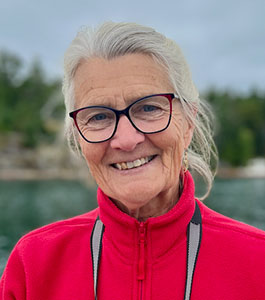
This past month, I have been exploring the west coast of Greenland and the Canadian Arctic Islands of Nunavut. I have been guiding guests on polar class expedition ships in the “cold forbidding North” for 30 years. My current role is as a consultant and mentor to the Expedition Leader and staff on the vessel, the MV / Greg Mortimer. In addition, I am a liaison between Inuit communities and the company, Aurora Expeditions. This has given me a great opportunity to learn more about life in Nunavut.
This year, summer has been short at 74N, and autumn will not last long either. Deciduous willow and birch have lost their leaves. Migratory waterfowl, seabirds, and snow buntings have all flown south. Arctic cod and Greenland halibut are feeding in quiet, protected bays, attracting beluga and narwhal for feeding and fattening before the fish move into deeper, less accessible waters. Daily fresh snow highlights erosional patterns on the slopes of Somerset, Devon, Bylot and northern Baffin. In calm, protected bays, nilas is forming on the sea. Polar bears are pacing on shore waiting for the ice to become strong enough to hold their weight for hunting. We saw a female with two cubs. She has lost a lot of weight, but her young of the year look healthy. We have high hopes they will all survive until the sea freezes enough for her to hunt. The rhythm of life goes on here in the High Arctic, even as climate change challenges present themselves.
Hopefully, the APS mission of support for the polar regions will continue equally, as we bring more voices into the conversation about our frozen world. Please visit www.americanpolar.org to join and to donate. Also, please feel free to share this newsletter in your social circles and your virtual platforms. To participate, contact us at info@americanpolar.org. Thank you for your continued support.
Susan Adie, President APS
Honoring CAPT Brian Shoemaker, USN (1937-2017)
“Our Second Founder”
The American Polar Society is honoring the late, beloved Captain Brian Shoemaker, USN, with a special fund in his name. Brian Shoemaker revived the APS following the death of the original founder, August Howard, in 1988. From the 1990s through the early 2000s, he modestly held the office of secretary, but was the face, heart, soul and de facto executive director of the organization, expanding the membership and inaugurating a series of landmark symposia.
The kickoff of our fundraising effort in the name of Brian Shoemaker and his dream to continue a strong APS has already raised $1,500. Members’ financial and skills contributions are what make our organizational growth and development possible. It is with deep gratitude that we thank everyone who has contributed. With 9 short years to go to our centenary, we have a lot of work ahead to offer our readers a greater focus on the polar world. We cannot do it without your generous support. Thank you to those who have already generously contributed to this fund to honor Capt. Shoemaker and to continue the work he was so passionate about!
Support the American Polar Society today!
Contribute to the
Brian Shoemaker Fund,
a fund for organizational growth and development.
Give $50, $100, $500, $1,000.
Make your check out to the Brian Shoemaker Fund
and mail to the American Polar Society Financial Center,
P.O. Box 1243, Monrovia, CA 91017
Recognizing LCDR Conrad “Gus” Shinn, USN (1922-2025)
The American Polar Society sends its condolences to the family and friends of Gus Shinn who recently passed away. LCDR Shinn was famous for being the first pilot to land at the South Pole in 1956 during Operation Deep Freeze. You can read LCDR Shinn’s perspective at this oral history interview conducted in 1999. The 2019 documentary, Ice Eagles, profiles LCDR Shinn’s historic flight by giving us a view of the most dangerous flying outside of combat. Additionally, the Museum & Archives of Rockingham County conducted a free virtual program in 2021 featuring LCDR Shinn. Thank you for your service, LCDR Shinn.
Recognizing LCDR Conrad “Gus” Shinn, USN (1922-2025)
The American Polar Society sends its condolences to the family and friends of Gus Shinn who recently passed away. LCDR Shinn was famous for being the first pilot to land at the South Pole in 1956 during Operation Deep Freeze. You can read LCDR Shinn’s perspective at this oral history interview conducted in 1999. The 2019 documentary, Ice Eagles, profiles LCDR Shinn’s historic flight by giving us a view of the most dangerous flying outside of combat. Additionally, the Museum & Archives of Rockingham County conducted a free virtual program in 2021 featuring LCDR Shinn. Thank you for your service, LCDR Shinn.
Mourning CAPT Alfred S. McLaren, USN (Ret.), PhD (1932-2025)
The American Polar Society sends its condolences to the family and friends of CAPT Alfred “Fred” McLaren, who recently passed away. As President of the APS from 2011 to 2016, Fred brought both a military and scientific perspective to an understanding of the role of the polar regions in an era of environmental change. Under his stewardship, the APS mounted two highly successful symposia: “The Polar Regions in the 21st Century: Globalization, Climate Change and Geopolitics” at the Marine Biological Laboratory, Woods Hole, Massachusetts in 2013, and “The Polar Oceans and Global Climate Change,” at the Scripps Institution of Oceanography, of the University of California, San Diego, two years later.
A graduate of the U.S. Naval Academy and the U.S. Naval War College, CAPT McLaren was a veteran of more than 20 Cold War submarine operations, including the first submerged transit of the Northwest Passage and the first survey under ice of the Siberian Continental Shelf. His military decorations include the Distinguished Service Medal (the nation’s highest peacetime award), two Legions of Merit and four Navy Unit Citations. His academic credentials include two master’s degrees (one in International Affairs from George Washington University, the other in Polar Studies from Cambridge University) and a Ph.D. in the Physical Geography of the Polar Regions from the University of Colorado.
A former research and teaching professor at the University of Colorado and the Lamont-Doherty Earth Observatory at Columbia University, Professor McLaren published the weekly magazine Science News as well as more than 50 scientific research papers. He also left us two superb chronicles of his adventures beneath the ice: Unknown Waters: A First-Hand Account of the Historic Under-Ice Survey of the Siberian Continental Shelf by USS Queenfish (SSN-651) (University of Alabama Press, 2008) and Silent and Unseen: On Patrol in Three Cold War Attack Submarines (U.S. Naval Institute Press, 2015).
At the helm of the American Polar Society, as at sea, his was always the steadiest hand and the most vigilant eye. Thank you for your service, CAPT McLaren.
Arts and Culture – Kane Historical Society screening of Endurance
As promised in the previous edition, Voices attended a special screening of the 2024 National Geographic documentary Endurance at the Elisha Kent Kane Historical Society in New York on September 23. This Endurance, which should not be confused with a half-dozen other feature-length films about the harrowing ordeal of Sir Ernest Shackleton and his crew adrift in the vast, frozen Weddell Sea, is arguably the best of the lot.
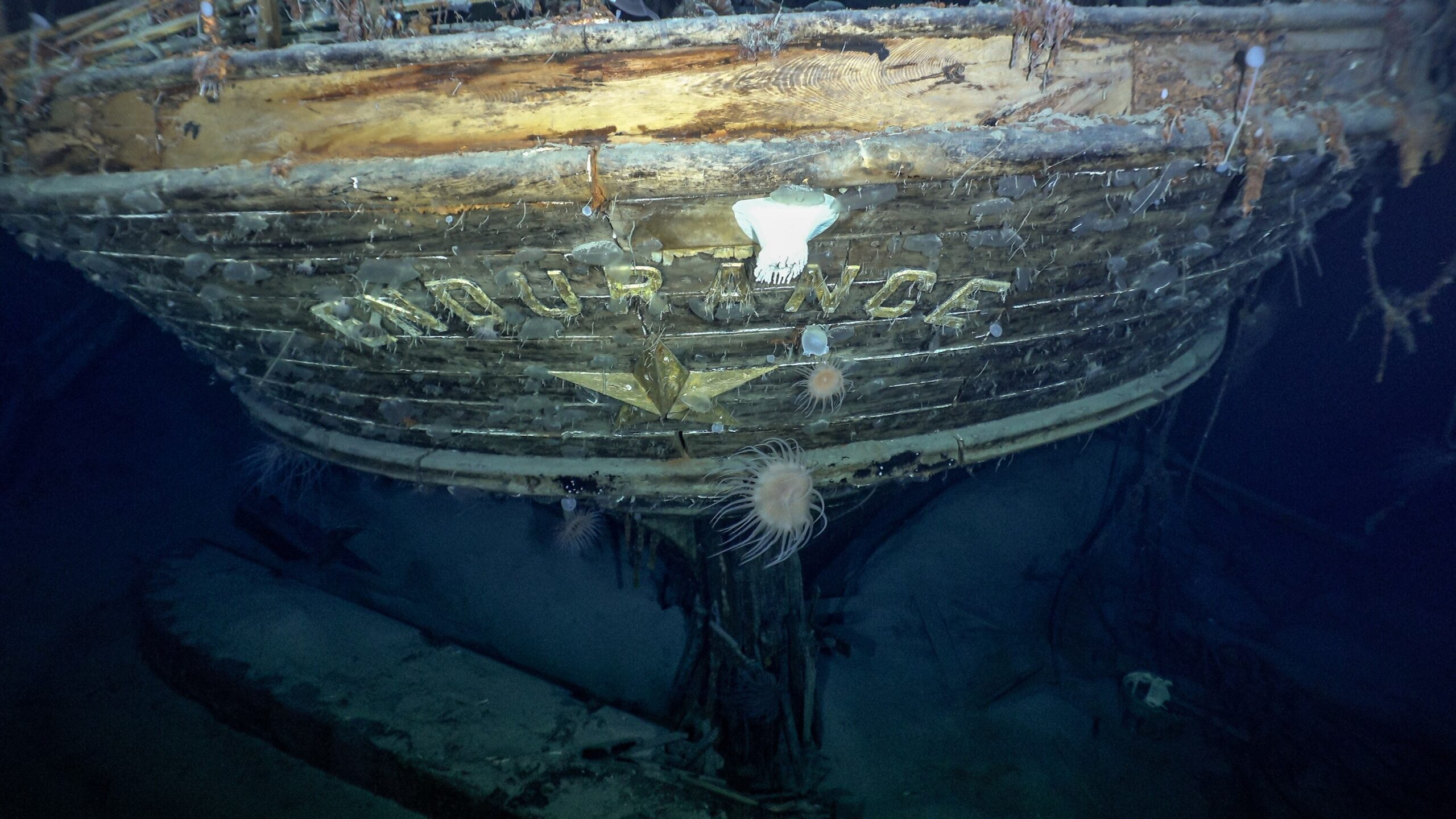
Directed by Elizabeth Chai Vasarhelyi, Jimmy Chin and Natalie Hewit, the film tells two stories simultaneously: One, the epic endeavor of Shackleton’s 1914-17 Imperial Trans-Antarctic Expedition to survive when their tall ship, the Endurance, became trapped in the sea ice and sank. And two, the successful attempt of the Falklands Maritime Heritage Trust Expedition22 to locate the wreck just three years ago. The juxtaposition works since the 2022 expedition risked becoming trapped in the ice themselves as they prolonged their efforts to locate the fabled ship via unmanned submersibles. “How can you be part of Shackleton’s story and quit?” asked a member of the modern crew.
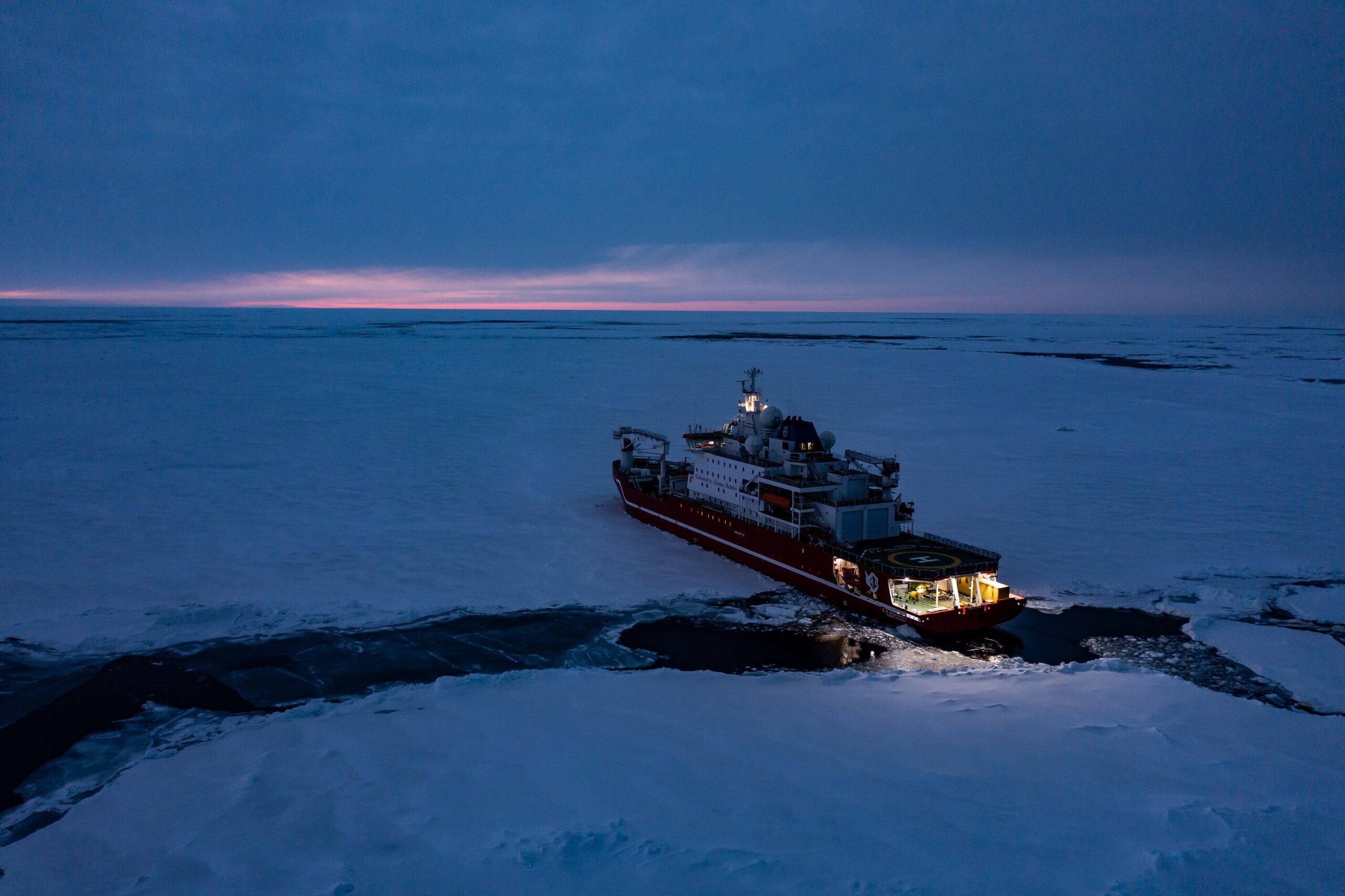
The stars, on the one hand, are Sir Ernest himself, along with Captain Frank Worsley, the shipmaster, and other members of the Endurance crew. They appear in the silent motion-picture footage shot contemporaneously by their shipmate, Frank Hurley. Their recorded voices and personal narratives effectively supplement the dramatic visuals. Intercut with Hurley’s restored and artfully colorized cinematography are scenes of the modern-day search starring John Shears, a British polar geographer and leader of Expedition22, and Mensun Bound, a maritime archaeologist from the Falkland Islands whose specialty is excavating shipwrecks.
Arts and Culture – Two Arctic Documentaries
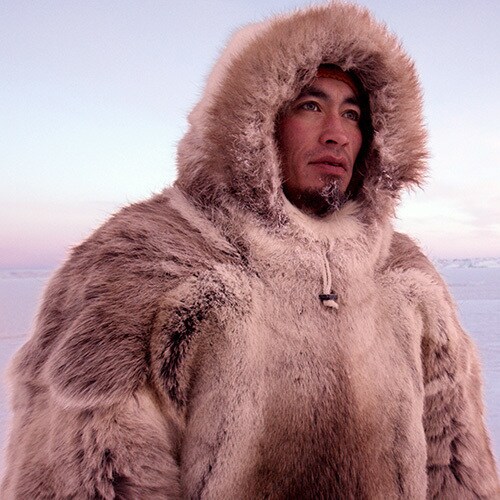
The newly released Trade Secret follows three unlikely allies on a mission to protect polar bears from international commercial trade. It was filmed over six years in nine countries with the goal of understanding and exposing the international commercial trade in polar bear hunting. As unfortunately happens in many investigative films, a disturbing truth unfolds.
Released in 2020, National Geographic’s The Last Ice explores the effect of climate change on those who call the Arctic home. The Inuk people of the north are divided between modern and traditional lifestyles and Canadian and Danish political systems. Those divides are becoming more pronounced due to the effects of a warming northern climate.
Science and Operations – International Polar Year, 2032-2033
The 5th International Polar Year (IPY-5) is planned for 2032-2033 and is a continuation of the long-standing tradition of International Polar Years. IPY-5, which will be held 25 years after IPY-4 in 2007-2008, aims to address the urgent need for coordinated international research on polar and global changes, building on the legacy of previous IPYs. IPY-5 will focus on the impacts of climate change in the Arctic and Antarctic, bringing together scientists, Indigenous knowledge holders, and global stakeholders to produce actionable insight.
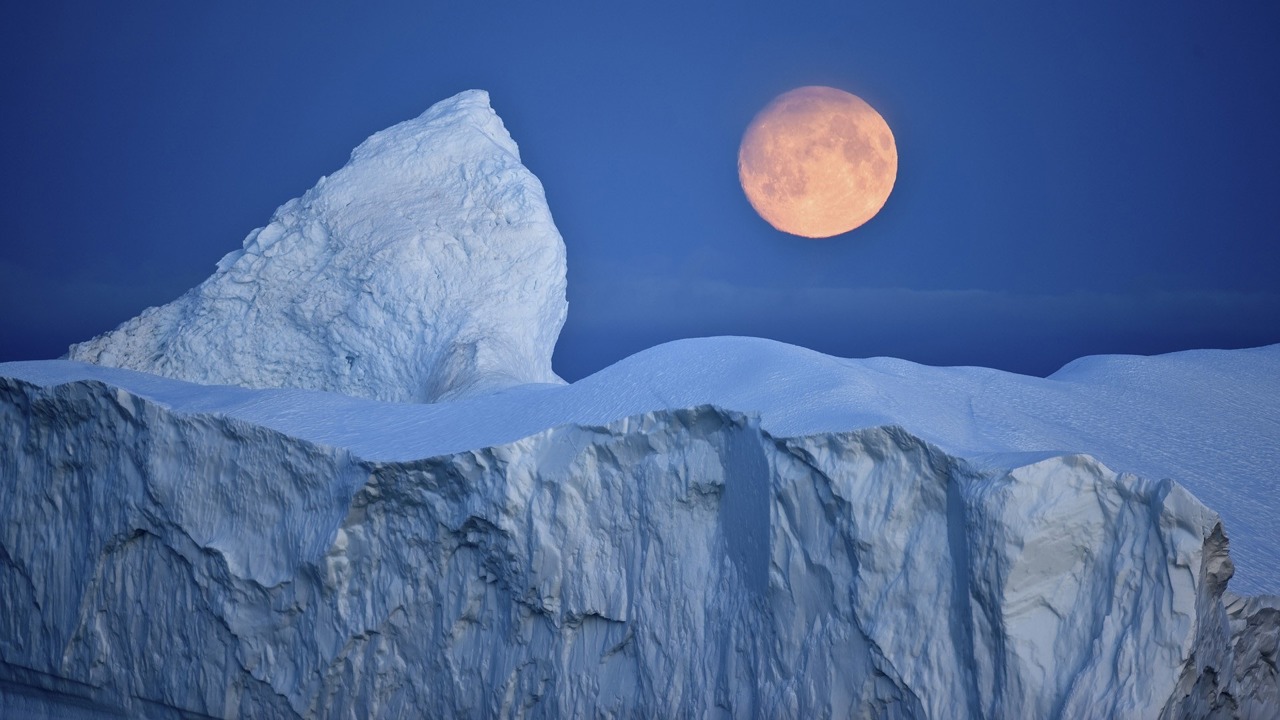
APS Board member William Muntean, who participated in a two-day workshop hosted by the National Academies of Science in May to discuss U.S. participation in IPY-5, said, “It was fascinating and enlightening to see the wide range of expertise and priorities that workshop participants brought to the workshop.” Noting that China was recognized in June as conducting more science in Antarctica than any other country, he noted, “It was prescient that one of the major topics of conversation was whether the United States would use IPY-5 to reclaim its leadership in polar research or fall further behind.” The public can submit their recommendations for the 2027-2031 U.S. Arctic Research Plan through an official process until November 15.
Science and Operations: Polar Citizen Science Collective
Have you ever heard of The Polar Citizen Science Collective (PC)? It is an exciting non-profit that unites tour operators, scientists, polar guides and travelers to enable research and education through citizen science.
While the concept of citizen science has deep historical roots, with examples of non-professionals contributing to scientific endeavors stretching back to the 18th century, such as Edmund Halley’s requests for solar eclipse observations and Thomas Jefferson’s weather observer network. More recently, the annual Christmas Bird Count has become a popular citizen science activity. The term “citizen science” emerged in the 1990s to describe the increasing public involvement in scientific research, particularly with the help of technological advancements like the Internet, which enabled widespread data collection and sharing. That interest and those technologies are being used in the polar world today by travelers and research project leaders from institutions like governments and universities.
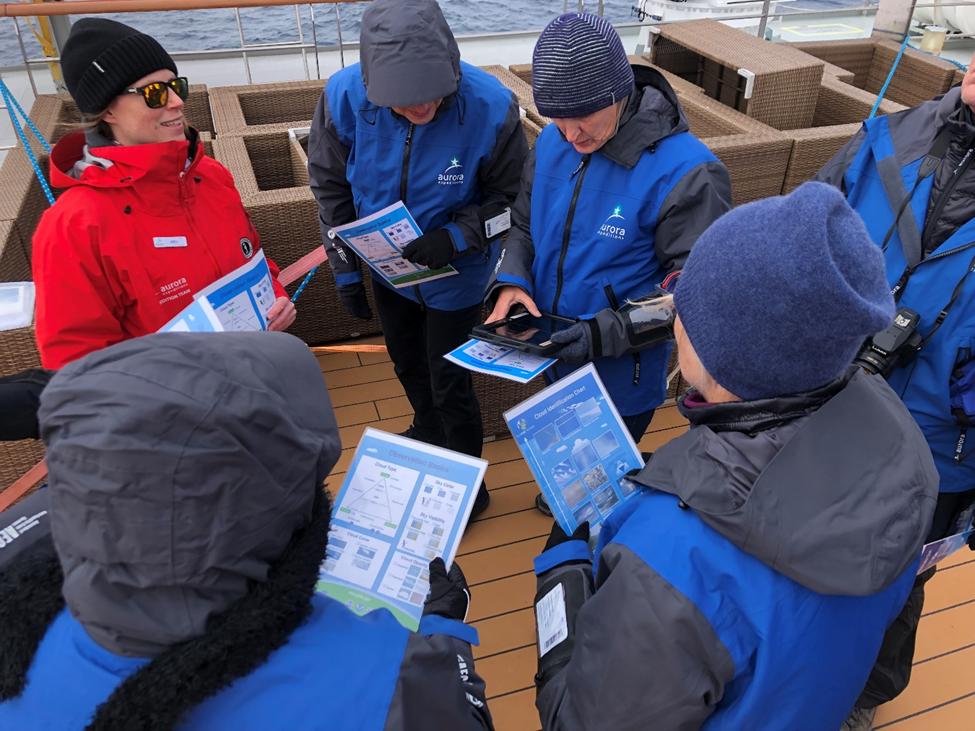
While working in Antarctica, a team of experienced scientists, who are also field guides on expedition cruise vessels, recognized that expedition ships to the Arctic and Antarctic were visiting the same destinations over and over again for months on end. They understood that researchers were unable to visit a particular spot as often as people working on these small cruise ships. APS interviewed Dr. Annette Bombosch, Director and Co-founder of the PC, to learn more.
APS: What does the PC do?
Bombosch: We form a collaboration with the IAATO & AECO tour operators, guides, guests and scientists with the primary goal to support science and enhance guests’ understanding and appreciation of that research.
APS: You mention tour operators, so are the operators themselves supporting these efforts?
Bombosch: Oh yes, operator involvement is key. Citizen science is most successful when it is embraced by the entire company, both from the head office as well as the onboard expedition teams.
APS: In addition to supporting science, it must give guests an extra experience that not every guest to the polar region receives.
Bombosch: That is true. At the end of every season, we have a meeting with the collaborating companies to see what lessons were learned and what feedback they received from the guests. It was amazing to learn that one guest involved in “cloud cover” surveys practiced this upon returning home during COVID and she said it changed her life!
APS: How many tour operators are working with you in any one season?
Bombosch: It depends on the year, but we are growing slowly.
APS: And what projects are those visitors to the polar regions helping to support?
Bombosch: We support a range of projects that guests can participate in. However, it is at the operator’s discretion which projects they offer on board. You can view all PC supported projects at https://polarcollective.org/projects.
APS: Is there anything else you would like to share about your efforts?
Bombosch: What truly excites us is the power of the collective. Many people, in the same spot over many months, have multiple data-collecting opportunities. This is something that tourism can give back to the environments we visit. Stepping up to support science and coming home with new experiences.
The Great Toilet Paper Caper
(Editor’s Note: I get excited anytime a story comes in that starts with, “I think the statute of limitations has run out on this adventure.” There are no names or exact dates in the story, just in case.)
In the early 1990’s I led an applied research project on the McMurdo Ice Shelf, a few miles distant from McMurdo Station on Ross Island in Antarctica. At that time, Williams Field supported ski-wheel Hercules aircraft (LC-130) that provided all of the heavy cargo and much of the passenger movements from McMurdo to interior Antarctica as well as intercontinental airlift to and from Christchurch, New Zealand. To facilitate efficiency, a seasonal camp called “Willy Town” was established adjacent to the airstrip. A group of 25 civilian staff, who called themselves “Willy Public Works”, lived at the airfield and oversaw maintaining the airfield and the facilities.
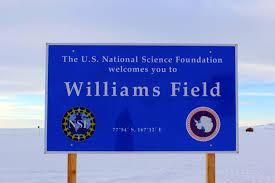
Since my research project lasted approximately three years, I became very familiar with and to the Willy Public Works team to a sufficient extent that I witnessed (and perhaps participated in) many pranks. I was surprised that most of this group rarely if ever went into “town” (McMurdo) during their deployment. The regular exception to this rule was that the Willy Public Works foreman would dutifully attend the Saturday morning meeting where the heads of participant agencies and major departments meet with NSF leadership to debrief past week efforts and coordinate upcoming activities. That foreman would report any interesting or important news back to the rest of the Willy Public Works team later that day.
There soon grew a tradition for the foreman to plant a rumor at the Saturday morning meeting and wait to see how quickly and accurately the rumor made it back to those who never left Willy Town. Just as the game of “telephone” can be fun, this prank quickly became a great diversionary fun and soon the Willy Public Work’s team competed to create the rumor that the foreman would then plant at the next Saturday meeting.
About two-thirds of the way through the summer season, the foreman planted the rumor that the Station is running out of toilet paper. Having been through the COVID-19 scare on the same product, you can probably guess that, within 24 hours, all dormitory supply closets and warehouses had been raided. The only toilet paper to be found was in individual lockers and under their beds. Management tried mightily to quash this rumor and to get everyone to return their hoarded rolls for all to utilize, but efforts to squash a rumor on such a vital product are rarely successful, so a dozen or so full aircraft pallets of toilet paper (more than 1,000 rolls) were flown in a few days later. I do not know if senior management ever learned from whence the toilet paper rumor started but Willy Public Works staff did immediately curtail this particular prank but devoted that energy to other entertaining pranks.

(Editor’s Second Note: And for the record, the American Polar Society does not condone any illegal activities, but we enjoy a good, harmless prank among friends as much as anyone does. We do encourage you to share with us your memories of pranks that helped entertain members of your team when in the polar region.)
Observations from an Arctic Cruise Ship
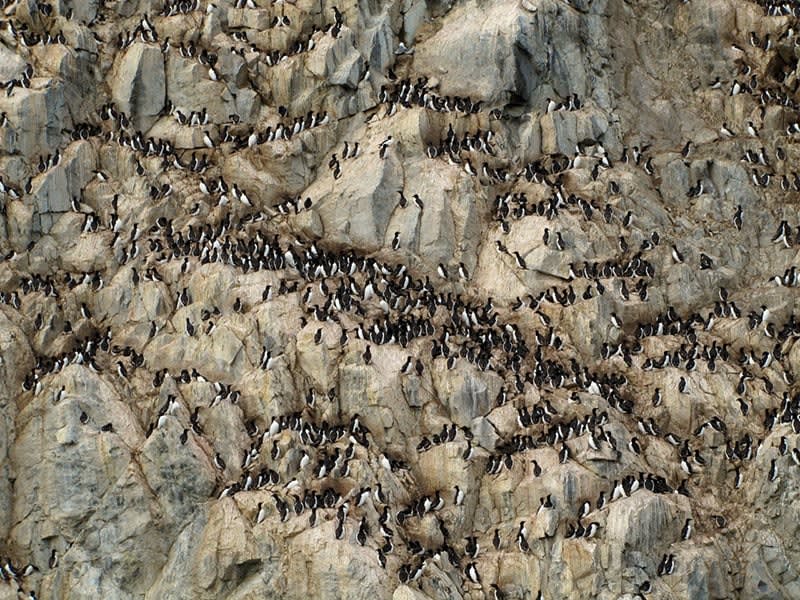
You may have read about high Arctic cliffs serving as rookeries for tens of thousands of nesting birds. Seeing them is quite an experience. The cliffs favored by the birds are as crenelated as the ramparts of a medieval castle. The citizens of this avian metropolis occupy a multitude of ledges. You see the murres and other species on almost every ledge. You see them in clusters like dust mites in the sky over the cliffs. You see them swooping down from the cliffs, and you see them riding the waves. The chicks, still in down, will leap to the water and follow an adult parent to a farther shore, because the cliffs have to be abandoned by August when the predators arrive. The most extraordinary thing, though, is the sound the birds make. It’s a ha-ha-ha sort of chirp, as if they were laughing.
Imagine ten thousand ha-ha-ha’s. One wonders who is the observer and who is the observed, and who is having the last laugh. (Photo from The Top 5 Bird Cliffs in the Arctic. For a fun video, see Thick-billed Murres on the Alkefjellet Cliffs, Svalbard.
In the News …
The Byrd Polar and Climate Research Center Archival Program (Polar Archives) is accepting proposals until October 31 for research projects that require access to its extensive onsite collections. The mission of the Polar Archives is to advance knowledge, research, and learning about the history of polar exploration within the context of an active polar research environment.
A six-week heatwave cost Svalbard (Norway) approximately 1% of its ice in the summer of 2024, more than any year on record. Researchers warned that the heatwave that caused this record loss could become normal in the coming decades.
Rand released a study that estimated increasing opportunities for new maritime activity in the Central Arctic Ocean due to reduced ice coverage due to climate change. The study concluded that fishing and mining were unlikely to be major activities in the Central Arctic Ocean but that there would be an increased need for search & rescue and disaster response capabilities in the near future.
The Big, Beautiful, Bill signed into law by President Trump in July included nearly $25 billion for the U.S. Coast Guard, some of which will be used to build new polar icebreakers and build a deep water port in Nome (Sitnasuaq), Alaska.
The U.S. NSF plans to end in October its contract with the RV Nathaniel B. Palmer, the lone U.S. research icebreaker operating in Antarctica. U.S. scientists have urged NSF and Congress to reconsider the decision.
We are still learning about this wonderful and strange world we live in and have so much more to discover. Scientists in the Arctic recently discovered that diatoms (one-celled algae) unexpectedly live and are active in temperatures well below any other similar being. A different group of scientists has learned that octopuses make octagon shapes on the Arctic seafloor during their catching and feeding process. Still on the to-do list, scientists are investigating on the other side of the globe the cause of radio pulses in the Antarctic ice.
For years, the Commission on Conservation of Antarctic Marine Living Resources (CCAMLR) established a 620,000 metric ton catch limit of Antarctic krill during the fishing season in the Southern Ocean. For the first time ever, commercial fishers reached that limit in August, well before the end of the fishing season. The leading environmental organization, ASOC, has called for governments, including the United States, to take action at the CCAMLR meeting in October to protect krill and the Antarctic ecosystem that relies on these little creatures.
U.S. citizen Ethan Guo was released in August after being detained at a Chilean station on King George Island on the Antarctic Peninsula for two months after reportedly landing at that station without permission. Guo was reportedly trying to become the first pilot to fly solo across all seven continents.
In September, the U.S. Coast Guard scrambled to monitor two Chinese research vessels in a portion of the Arctic Ocean claimed by the United States as part of its extended continental shelf (ECS). The U.S. claim is not internationally recognized, in part because the United States has refused to ratify the treaty that would grant it rights to claim the ECS.
Thank you, Members! Volunteers Needed!
It is with deep gratitude that we thank all members of The American Polar Society. As an all-volunteer organization, we would not exist without you contributing your time and resources.
Now may be the time in your life when you are looking for opportunities for more involvement. If so, the timing could not be better!
We are looking for members who may wish to step up to work on the Board. We are expanding the number of Board members. We ask that you commit to serving at least one term (three years), attending monthly meetings (at least 10 times per year), contributing your working knowledge or experience of the polar world with the APS and its members, and sharing a passion to support our mission.
One specific need is for a legal advisor. We ask that you have U.S. non-profit experience in addition to the above requirements.
If this sounds like a perfect opportunity to you, please reach out to us at info@americanpolar.org.
This edition of Voices from the Ice is brought to you by Susan Adie, Sheldon Bart, George Blaisdell and Bill Muntean.